Run your own team of AI agents.
A portable project standard for teams of autonomous agents working long stretches from clear requirements — not a magic app. A six-part video series, with a real production SaaS as the case study.
6 episodes · ~19 min · English
A standard, not a magic app
Autonomous agents delivering real software isn't the fantasy of “type a prompt, get an app.” It's a repeatable project standard — a structure you set up before the first line of code.
Define the WHAT first.
Decompose the idea structurally into folders, decisions, and tickets before any execution — that's what a real onboarding produces.
The structure has a brain.
One folder per subproject, and one always exists — the wiki, the single source of truth where agreements, stories, logs, and decisions live. The other repos sit around it.
Every agent knows where it stands.
Anchor variables wire each agent to its repo and its board — no agent guesses its own context.
Global norms cascade.
Rules live in inherited instruction files, so every squad and subagent stays coherent — one style, one vision, no drift between sessions.
Two phases, both in the wiki.
Planning (talk to the coordinator → everything lands as tickets) and Execution (the coordinator launches the whole team in parallel).
Portable pattern ≠ portable roster. The structure travels to any domain; the characters do not. A code reviewer is not who analyzes a podcast script. You copy the standard, then cast a new roster for your own domain.
The right model at each level
Nobody had ever chosen a model — every level silently inherited the global default. An audit of run data revealed an entire cycle had run start-to-finish on the coordinator's model. Declaring the three levels explicitly made the next full run 2–4× cheaper with no observable quality loss.
| Level | Role | Model | Work |
|---|---|---|---|
| 1 | Coordinator | Fable 5 | Judgment · routing |
| 2 | Squad PM | Opus 4.8 | Planning · orchestration |
| 3 | Subagent roster | Sonnet 5 | Execution against an already-written contract |
An unchosen default is a decision someone else made for you.
Six episodes, one standard
Episode 1 sets the thesis; episodes 2–6 each walk one era of how the standard was actually built — with scars. Diamante Residences, a real, in-production multi-tenant SaaS, is the case study, not the star.
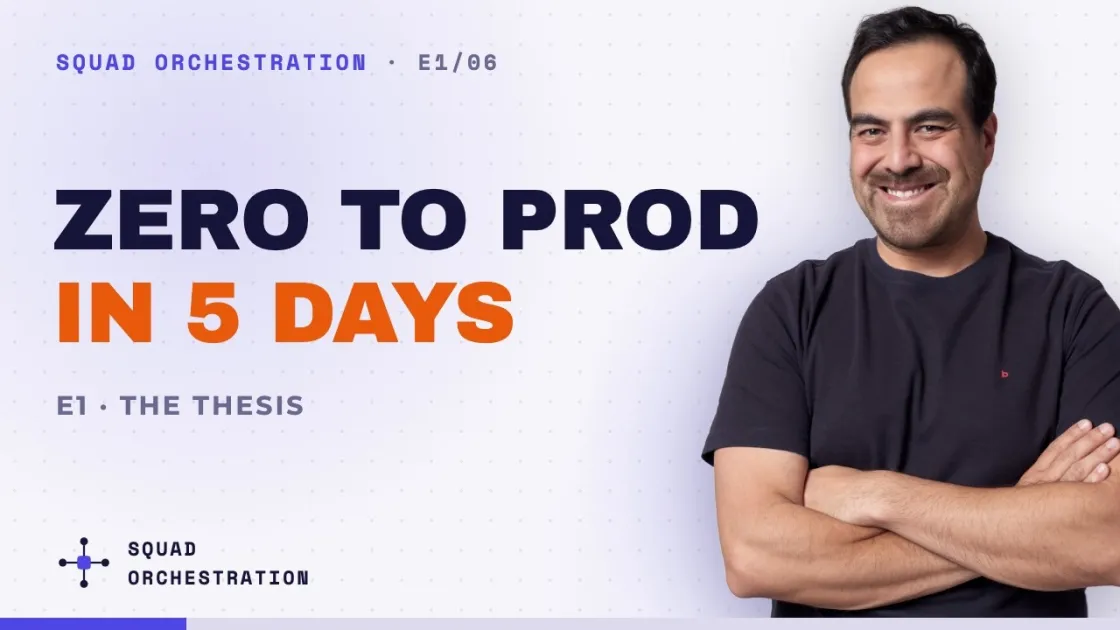
E1 · The Thesis
4:01A team of autonomous agents took a real product from zero to production in days. This episode lays out the thesis — a project standard, not a magic app — and draws the key line: the structure is portable, the roster is not.
Born here: the five-point portable structure and the pattern-≠-roster distinction.
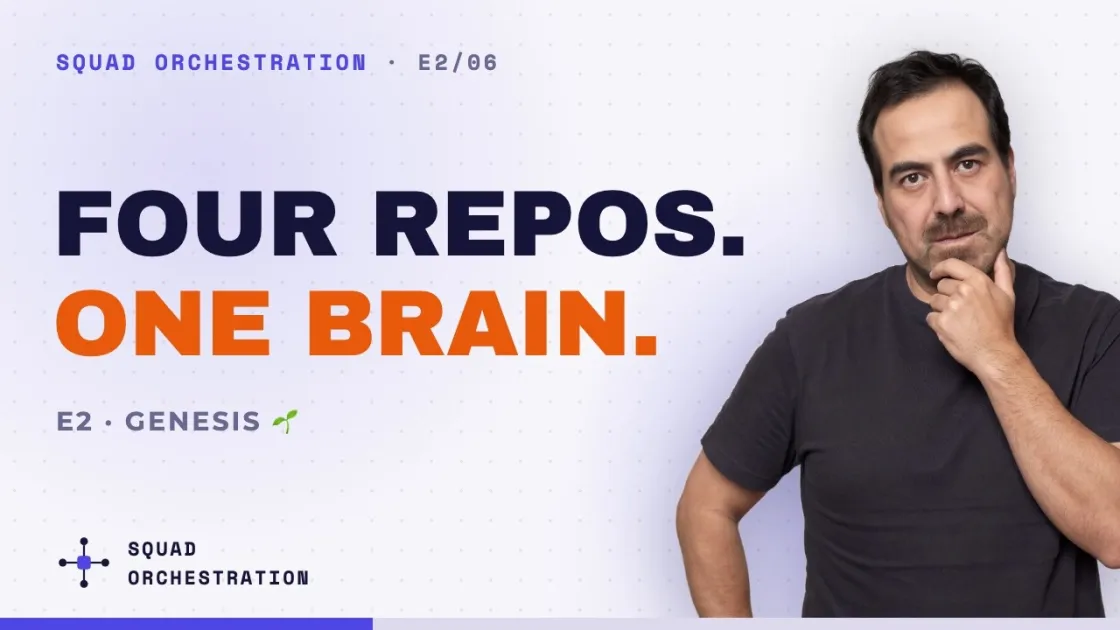
E2 · Genesis
2:43The brain comes before the body: the wiki is born first, then the other repos. A multi-round grill turns a fuzzy problem into a catalog of stories, first decisions, and a full board of tickets.
Born here: define the WHAT first · the wiki as the brain · anchor variables.
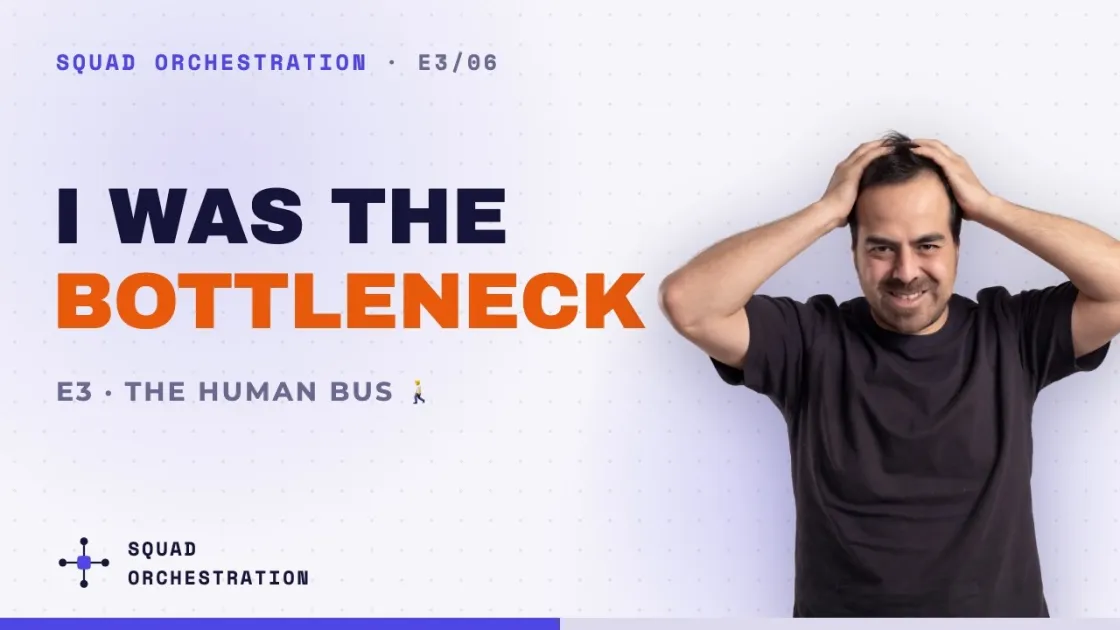
E3 · The Human Bus
2:46Every message travels through a human — the bus and the bottleneck, by design, because trust is earned before it's delegated. The era proves written handoffs work.
Born here: the written handoff with a consumption contract · the wiki as the only interface.
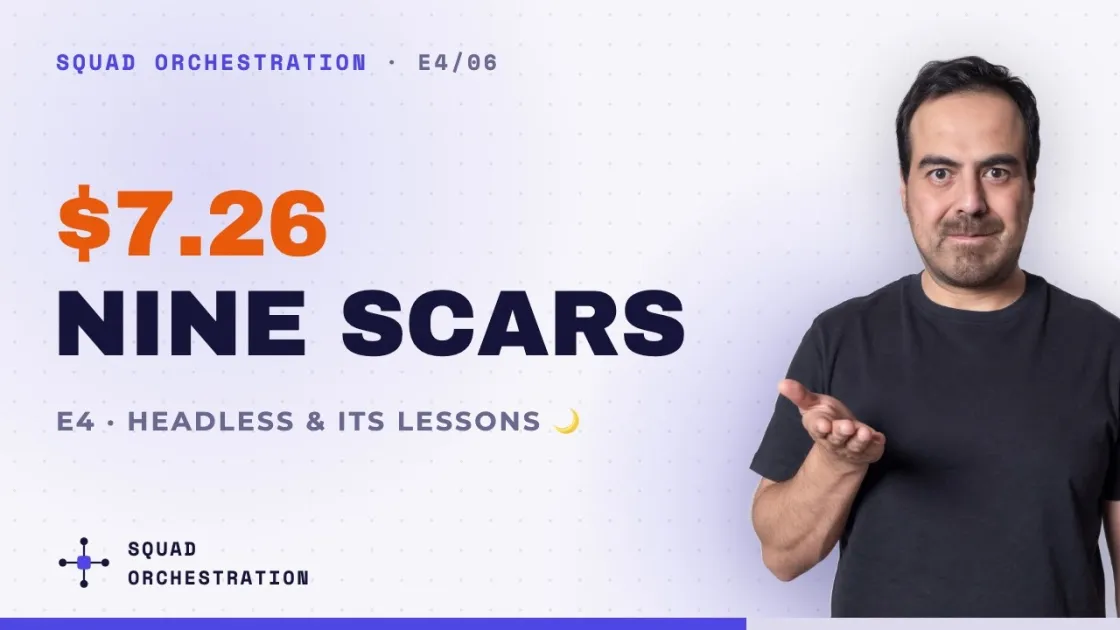
E4 · Headless & Its Lessons
2:39The human steps out of the loop for the first headless runs — and the post-mortem's surprise is that the squads' code quality was never the problem; the orchestration mechanics were. And mechanics can be redesigned.
Born here: "done" means verifiable evidence, never activity · the contract lives in the prompt.
E5 · Model v2
3:17Coordinator and human rebuild the model together — a redesign, not a patch: squads own their merges, the audit moves post-merge, and a deterministic heartbeat checks the ledger against evidence.
Born here: squads self-merge + post-merge audit · ledger checked against evidence · lifecycle ceilings.
E6 · Operation at Scale
3:44v1 is alive: the model shifts from building to operating and matures under fire — analyze with the human, escape the process killer's jurisdiction, and drive a full overnight campaign to completion. It closes on the final doctrine: intelligence by level.
Born here: analyze with the human · ephemeral squads, fresh context per ticket · intelligence by level.
Want to run a team like this?
This is exactly what the 1:1 mentorship teaches — harness setup, spec-first delegation, and working a real backlog through your own agent squad.
Book a free exploratory call